Published on July 02, 2026
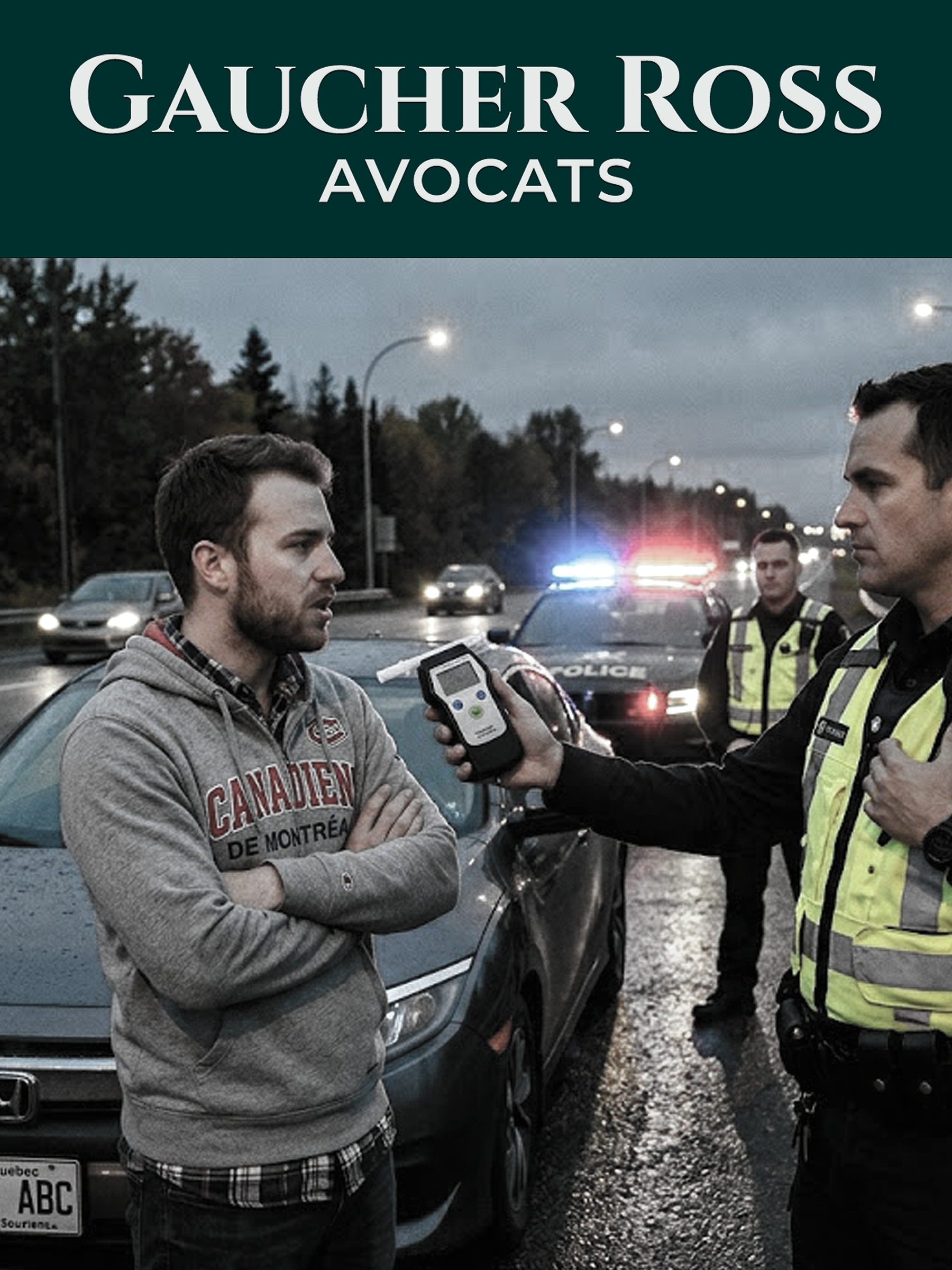
In practice, the legal consequences are generally very similar. In Quebec, both refusing to provide a breath sample and driving with a blood alcohol concentration (BAC) equal to or exceeding 80 mg of alcohol per 100 ml of blood constitute criminal offenses and trigger immediate administrative sanctions.
On one hand, refusing to blow into a breathalyzer constitutes the criminal offense of failure or refusal to comply under subsection 320.15(1) of the Criminal Code. Furthermore, section 202.5 of the Highway Safety Code provides that a peace officer shall immediately suspend the driver's license for a 90-day period when a person refuses or fails to comply with a lawful demand to provide a breath sample.
On the other hand, when a person blows over the legal limit of 80 mg/100 ml, section 202.4 of the Highway Safety Code also imposes an immediate 90-day driver's license suspension. Additionally, subsection 320.14(1) of the Criminal Code provides for the offense of driving with a prohibited blood alcohol concentration. A conviction notably leads to the revocation of the license, the inability to obtain a new one before the expiration of the statutory period, and the obligation to undergo specific evaluations before any new license can be issued.
Consequently, refusing to blow is not a way to avoid the consequences of impaired driving. The refusal itself constitutes a criminal offense and results in penalties comparable to those imposed on a person who fails a breathalyzer test.
Learn more
Legal Equivalency and Immediate Suspensions for Refusal vs. Blowing Over
In practice, the legal consequences are generally very similar. In Quebec, both refusing to provide a breath sample and driving with a blood alcohol concentration (BAC) equal to or exceeding 80 mg of alcohol per 100 ml of blood constitute criminal offenses and trigger immediate administrative sanctions. On one hand, refusing to blow into a breathalyzer constitutes the criminal offense of failure or refusal to comply under subsection 320.15(1) of the Criminal Code. Furthermore, section 202.5 of the Highway Safety Code provides that a peace officer shall immediately suspend the driver's license for a 90-day period when a person refuses or fails to comply with a lawful demand to provide a breath sample.
Criminal Offenses, License Revocation, and Essential Legal Guidance
On the other hand, when a person blows over the legal limit of 80 mg/100 ml, section 202.4 of the Highway Safety Code also imposes an immediate 90-day driver's license suspension. Additionally, subsection 320.14(1) of the Criminal Code provides for the offense of driving with a prohibited blood alcohol concentration. A conviction notably leads to the revocation of the license, the inability to obtain a new one before the expiration of the statutory period, and the obligation to undergo specific evaluations before any new license can be issued. Consequently, refusing to blow is not a way to avoid the consequences of impaired driving. The refusal itself constitutes a criminal offense and results in penalties comparable to those imposed on a person who fails a breathalyzer test. If you are facing charges or need to evaluate the legality of a complex situation, it is highly recommended to speak to a lawyer to properly protect your rights.